Product
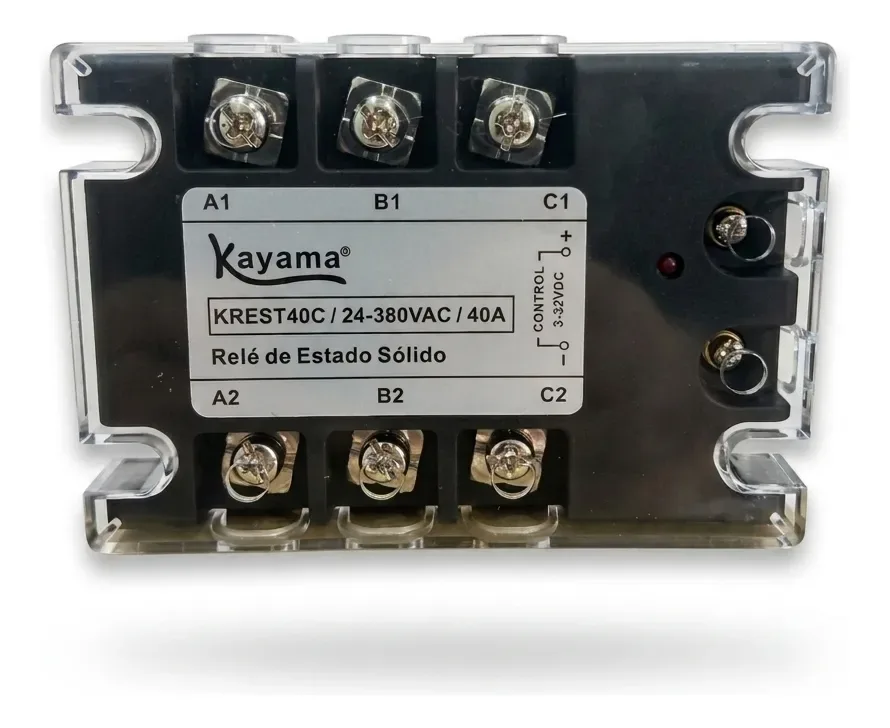
Three-Phase 40A Solid State Relay - KREST40C - Kayama
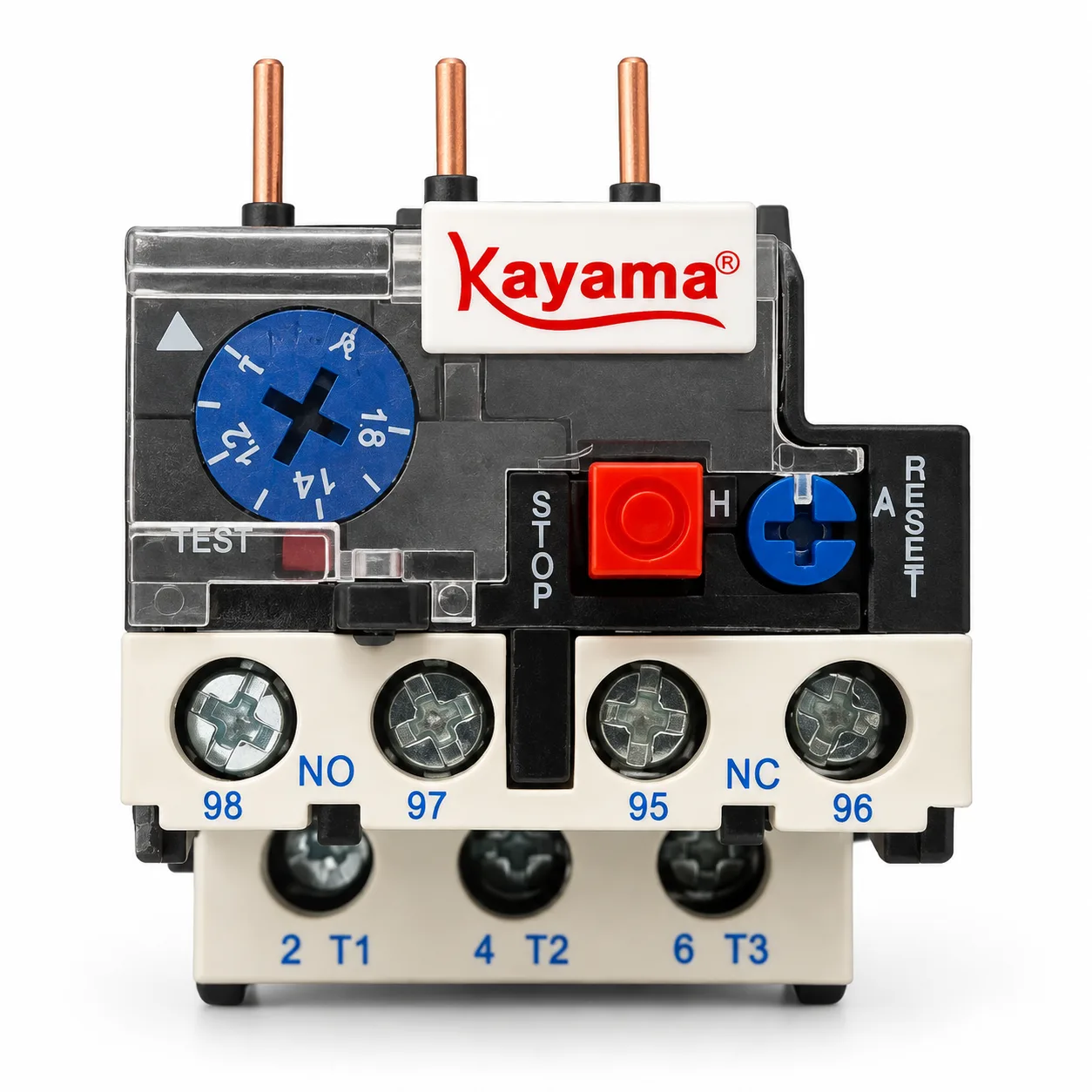
Kayama KREST40C 40 A Three-Phase Solid State Relay for electronic switching and three-phase automation
The Kayama KREST40C Three-Phase Solid State Relay is an electronic switching device designed for three-phase systems, with a stated rated current of 40 A. Solid-state technology provides switching without conventional electromechanical contacts for professional control and automation applications.
- SKU
- 07130031
- Category
- Solid State
Talk to a specialist
Our team of consultants can help with specification and sizing.
Technical Description
The Kayama KREST40C Three-Phase Solid State Relay is an electronic component designed for switching loads in three-phase electrical systems using solid-state technology instead of conventional electromechanical contacts.
The KREST40C has a stated rated current of 40 A and is designed for integration into control and automation systems requiring electronic switching of compatible three-phase loads.
Its semiconductor power stage provides electronic switching without mechanical contact movement.
Technical Characteristics
- Brand: Kayama
- Model: KREST40C
- Type: Three-Phase Solid State Relay — SSR
- Number of phases: 3
- Stated rated current: 40 A
- Switching technology: solid state
- Purpose: electronic switching of three-phase loads
- Application: electrical control and automation
Solid-State Technology
Unlike conventional electromechanical contactors and relays, the KREST40C performs switching through semiconductor components.
This eliminates mechanical contact movement during normal switching operation.
System performance depends on proper electrical and thermal sizing.
Three-Phase Configuration
The KREST40C is intended for three-phase applications.
Before installation, verify system voltage, load current, electrical configuration, phase sequence when relevant, load characteristics, protection, control system and thermal conditions.
40 A Rated Current
The stated rated current of the KREST40C is 40 A.
Actual usable current depends on load type, operating current, starting current, surge current, ambient temperature, ventilation, thermal dissipation, switching frequency and duty cycle.
Thermal Dissipation
Solid-state relays generate heat while conducting current.
Proper thermal design is essential for reliable operation.
Heat-sink requirements should be determined according to actual current, ambient temperature, ventilation, duty cycle, switching frequency and panel conditions.
Derating
Under unfavorable thermal conditions, the permissible operating current may need to be reduced.
This derating can be necessary in high ambient temperatures, poorly ventilated enclosures, continuous-duty operation or inadequate thermal dissipation.
Load Characteristics
The type of connected load directly affects SSR sizing.
Three-phase resistive loads, heaters, motors, transformers, inductive loads, capacitive loads and electronic equipment may have significantly different electrical behavior.
Starting Current
Motors, transformers and certain other loads can draw starting currents substantially above their normal operating current.
The relay should therefore not be selected solely according to steady-state load current.
Three-Phase Heating Applications
When properly sized, three-phase SSRs can be integrated into:
- electric ovens;
- heating chambers;
- three-phase heating elements;
- heating machinery;
- automated thermal processes.
Motor Applications
Motor applications require additional consideration because of inrush current and inductive characteristics.
The KREST40C should only be applied to motor switching after confirming that the specific relay characteristics are suitable for the application.
It does not replace motor overload, short-circuit, thermal or machine-safety protection.
Control System Integration
The KREST40C may be integrated with compatible automation systems such as PLCs, temperature controllers, process controllers and industrial control interfaces.
The exact control-signal requirements must be verified before connection.
Electrical Protection
The solid-state relay does not replace circuit protection devices.
Circuit breakers, fuses, surge protection, overload protection and disconnecting devices should be selected according to the electrical design.
Failure Mode and Safety
Semiconductor devices may fail in different modes, including a condition where the output remains conductive.
Critical applications should therefore provide an independent method for disconnecting the load.
The KREST40C should not be used alone as a functional safety device.
Installation
Installation should be performed by technically qualified personnel.
Before energizing, verify system voltage, load current, load type, starting current, control system, protection devices, thermal conditions, heat dissipation, electrical connections and ventilation.
Kayama Quality
The Kayama KREST40C Three-Phase Solid State Relay is part of Kayama's professional range for electronic switching, three-phase electrical control and automation.
The Kayama KREST40C 40 A Three-Phase Solid State Relay can be integrated into three-phase systems requiring electronic switching when electrical and thermal characteristics are compatible.
- Three-phase heating elements — can electronically switch properly sized three-phase resistive elements.
- Industrial ovens — can be integrated into heating-control systems using compatible three-phase loads.
- Heating chambers and thermal processes — can operate in the electronic power stage controlled by a compatible controller.
- Temperature control — can be used where an electronic controller operates compatible three-phase heating loads.
- Industrial automation panels — can act as a power-switching element within automated systems.
- Industrial machinery — can be incorporated into three-phase machine circuits when load and SSR characteristics are compatible.
- Repetitive switching processes — solid-state technology allows frequent operation within electrical and thermal limits.
- Process automation — can receive commands from compatible electronic systems to switch three-phase loads.
- Industrial heating systems — can be part of electronic control for three-phase heating banks and compatible thermal systems.
- Compatible three-phase load switching — can be used in other applications when current, load type, protection and thermal dissipation are properly engineered.
Be the first to review this product.